
CELPIP Exclusive Practice Test 20 Sections80 LessonsLifetime
Speaking Practice Test-10
You are about to take the Speaking section of the CELPIP Test. There are 8 tasks in this section. Each task will assess your ability to speak clearly and appropriately in different everyday situations.
General Instructions:
- Time Limit: Each task has a specific time limit. Pay attention to the time given for each task.
- Respond Clearly: Speak clearly and at a natural pace. You will not be penalized for taking a brief pause to gather your thoughts.
- Stay on Topic: Answer the questions directly and focus on the task.
- Use Complete Sentences: Avoid one-word answers. Make sure you provide full, detailed responses.
- Relax and Be Yourself: Speak naturally and confidently. Your goal is to communicate clearly.
Tasks Overview:
- Task 1: Giving Advice You will be asked to give advice on a specific situation. Take a moment to think and respond clearly with your advice and reasons for it.
- Task 2: Describing a Scene You will see a picture and describe what you see. Focus on the key details, such as the people, activities, and surroundings.
- Task 3: Making Predictions You will hear or read a scenario. Predict what might happen next and explain why you think that will occur.
- Task 4: Comparing and Persuading You will be asked to compare two things and state your preference. Make sure to provide reasons for your choice.
- Task 5: Describing an Experience You will describe a personal experience. Explain what happened, how you felt, and why it was important to you.
- Task 6: Expressing Opinions You will be asked to share your opinion on a given topic. Make sure to support your opinion with reasons.
- Task 7: Dealing with a Difficult Situation You will be given a situation to respond to. Describe how you would handle it logically and clearly.
- Task 8: Summarizing Information You will listen to or read a short passage and summarize the key points in your own words.
Remember:
- Use the full time available for each task.
- Keep your answers relevant to the question.
- Take your time if you need to think before answering.
Part 1: Giving Advice
Topic: Your sibling wants to improve their public speaking skills. What advice would you give them?
- Share actionable tips to help them feel more confident and improve their delivery.
- Include strategies for practice, overcoming nervousness, and engaging an audience.
Part 2: Talking About a Personal Experience
Topic: Describe a memorable family gathering.
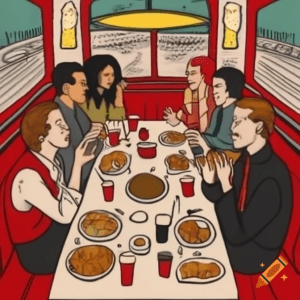
- Highlight the occasion, the activities that took place, and the people involved.
- Describe why it was meaningful or unforgettable.
Part 3: Describe a Scene
Topic: A peaceful lake with ducks swimming.



- Use vivid imagery to describe the calm atmosphere, the natural beauty, and the movements of the ducks.
- Include sensory details like sounds, sights, or smells.
Part 4: Make a Prediction After Looking at a Picture
Topic: A crowded beach with people sunbathing.
- Describe the scene and predict what might happen next, such as activities like swimming, playing beach games, or potential weather changes.
Part 5: Comparing and Persuading
Topic: Deciding between a large city or a small town to live in.
- Compare the conveniences and lifestyle differences between both options.
- Persuade the listener to choose one, focusing on factors like opportunities, cost of living, and quality of life.
Part 6: Dealing with a Difficult Situation
Topic: Finding your way after getting lost in a large city.
- Explain the steps you would take to stay calm, ask for help, or use technology to navigate.
- Focus on practical problem-solving and remaining composed.
Part 7: Express Opinion
Topic: Are electric cars the future of transportation?
- State your opinion clearly and provide supporting reasons.
- Discuss environmental benefits, technological advancements, and challenges.
Part 8: Describing an Unusual Situation
Topic: Describe a time when a pet or animal behaved unusually.
- Explain the situation, what made the behavior unusual, and how you or others responded.
- Share the outcome and your feelings about it.
Sample Responses
Part 1: Giving Advice
“Improving public speaking skills takes time, but with consistent effort, anyone can excel. First, I’d suggest practicing regularly, starting with short speeches on familiar topics. Recording yourself can help identify areas for improvement. Second, focus on clear pronunciation and a steady pace. Avoid rushing through sentences. Third, join a local club like Toastmasters or participate in school or workplace presentations to gain real-world experience. Additionally, preparation is key—research and organize your content so you feel confident about what you’re presenting. Finally, remember to make eye contact and engage your audience with a smile. Public speaking is a skill that grows with practice, so don’t give up!”
Part 2: Talking About a Personal Experience
“One of my most memorable family gatherings was my cousin’s wedding last summer. It was held in a beautiful outdoor venue with fairy lights strung across the trees. Family members from different cities came together, which was rare and exciting. We spent the day laughing, dancing, and catching up with relatives we hadn’t seen in years. The food was amazing, with a variety of dishes to suit everyone’s tastes. I particularly enjoyed watching the kids play while the older relatives shared stories. The highlight was when we all joined in a group dance—completely spontaneous and so much fun. It was a day full of joy, love, and unforgettable moments.”
Part 3: Describe a Scene
“The lake is calm, reflecting the golden hues of the setting sun. Ducks glide gracefully across the water, leaving gentle ripples behind them. The trees around the lake sway slightly in the breeze, their leaves shimmering in the sunlight. A few people sit on benches nearby, enjoying the serene atmosphere. You can hear the soft quacking of ducks, the rustle of leaves, and occasionally, the chirping of birds. The air smells fresh, mixed with the faint aroma of flowers from a nearby garden. The scene feels peaceful, like a perfect escape from the hustle and bustle of daily life.”
Part 4: Make a Prediction After Looking at a Picture
“The beach is bustling with activity. People are spread out on colorful towels and under umbrellas, soaking up the sun. Children are building sandcastles near the water, while others play volleyball further down the shore. In the background, waves crash gently, and seagulls circle above. Looking at this scene, I predict that as the day progresses, some families will start packing up to leave, while others might take a swim to cool off. The lively chatter and laughter will likely continue until sunset, creating a vibrant yet relaxing atmosphere for everyone.”
Part 5: Comparing and Persuading
“Living in a large city and a small town both have their advantages, but I believe a large city offers more opportunities. In cities, you have access to better jobs, education, and healthcare. There’s also a variety of entertainment options like cinemas, restaurants, and cultural events. Although small towns provide a quieter and slower lifestyle, they often lack the conveniences and facilities of cities. If you enjoy a dynamic environment with chances to grow professionally and personally, a large city is the better choice. The fast pace may take some adjustment, but the benefits are worth it.”
Part 6: Dealing with a Difficult Situation
“If I got lost in a large city, my first step would be to stay calm. Panicking doesn’t help. I’d check my phone for a map or use a GPS app to find my location. If that’s not an option, I’d look for a nearby landmark or street sign and ask someone for directions. Approaching a store employee or security guard feels safer when you’re in an unfamiliar area. If I still can’t figure it out, I’d consider taking a taxi or calling a friend for help. Staying patient and resourceful is key to solving such situations.”
Part 7: Express Opinion
“I absolutely believe that electric cars are the future of transportation. With climate change becoming a global concern, transitioning to electric vehicles is a step toward reducing carbon emissions. Electric cars are also becoming more affordable and efficient as technology advances, with charging stations now widely available. While challenges like battery production and charging infrastructure remain, governments and companies are investing in solutions. Furthermore, driving an electric car is often quieter and cheaper in the long run compared to traditional vehicles. Overall, they offer a sustainable and practical solution for the future of transportation.”
Part 8: Describing an Unusual Situation
“Once, my pet cat, who’s usually very calm, started chasing her own tail obsessively one evening. At first, we laughed, thinking it was just playful behavior. But then she began spinning so fast that she almost knocked over a lamp! Concerned, I decided to distract her with a toy, but she ignored it. Eventually, I called the vet, who assured us it was probably a burst of energy and nothing serious. Later, she finally stopped, looked at us as if nothing had happened, and curled up to sleep. It was a hilarious yet slightly worrying experience, one we won’t forget.”